• About
  • Contents
  • Tag Cloud

Temple Study

Sustaining and Defending the LDS Temple

Author: Bryce Haymond

Pronaos: A New Temple-Themed Blog!
August 23, 2008 by Bryce Haymond Leave a Comment
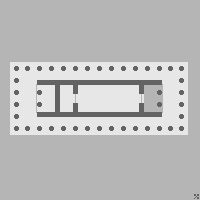
A Greek or Roman temple with the pronaos shaded.

A Greek or Roman temple with the pronaos shaded.

There is a great new LDS-oriented temple-themed blog in the Bloggernacle entitled Pronaos, which is run by Grampa Enoch.  From the first few posts this appears like it will be a very good blog indeed.

The word pronaos comes from the Greek for “before a temple” (pro-before, naos-temple).  It references the inner area of the portico (porch) of ancient temples, or between the outer wall or colonnade and the entrance to the inner shrine.  In modern-day LDS temples, the entryway/front desk/lobby area I suppose could be viewed as the architectural pronaos today.  It is the first zone of the archetypal tripartite or three-level temple, corresponding to the courtyard of Moses’ Tabernacle.

His latest post is on the location of Solomon’s temple, which we took a look at a few days ago.  According to Grampa Enoch, the only real answer to the question “Where was the location of Solomon’s temple?” is “We don’t know.” Unless we have future archaeological investigations, we won’t know for sure.

He also confirms my hestitancy about the Meridian Magazine article theory:

But even if we could completely excavate the Temple Mount/Haram, it is quite possible that all remains of Solomon’s original temple were removed in subsequent rebuilding programs…

…it is important to note that almost nothing visible on the plaza inside the Haram [Temple Mount] today dates from Solomon’s time. Most of what we see today was built by the Muslims after 638. There are also a number of crusader structures as well. Any interpretation of the Temple Mount must first deal with the dating and interpretation of the visible structures.

Since virtually all the evidence presented by Meridian Magazine’s theory is based on structures currently visible on the temple mount, the entire premise of the theory is unfortunately faulty.  Grampa Enoch gives an extensive list of sources that one may look to gain a better understanding of the pre-Islamic Temple Mount.

Take a look at Pronaos!

Posted in: Artifacts, Scholarship Tagged: bloggernacle, construction, greek, islam, jerusalem, location, meridian magazine, solomon, temple mount

Catholic Prayer and Mormon Prayer

August 21, 2008 by Bryce Haymond Leave a Comment

Book cover

There is a great article over at LDS Views by Dr. Alonzo Gaskill in which he discusses the differences and similarities between Catholic prayer and Mormon prayer.  It is quite interesting the comparisons he makes, particularly those with prayer in the temple.  I believe this article is from his latest book Know Your Religions, Vol. 1 – Mormonism and Catholicism.

The focus of the article is on Catholic prayer, and that when Catholics petition saints on their behalf it does not mean that they are praying to them.  Gaskill explains that praying to anyone else besides God is against Catholic theology.  What they are really doing is asking those saints, those faithful followers of Christ, to pray for them, to combine their faith in petitioning God for blessings.

In this way, Catholic prayer is similar to LDS prayer in the temple, where faithful members of the Church combine their prayers of faith with each other to make it more effectual in reaching God’s throne.

While I have personally witnessed many Catholics seemingly worshiping saints other than God, such a practice does not accord with Catholic teaching.  In this case, a benefit of a doubt might be granted, since Latter-day Saints also have practices which don’t accord with our teachings too.  My wife once worked for the library at BYU cataloging Mormon folklore, and she could give you a laundry list of interesting practices or beliefs among the Saints.

Read the article at LDS Views here.

Posted in: Practices, Scholarship, Temples Today Tagged: alonzo gaskill, blessing, catholic, faithfulness, prayer, round dance, saints

Should “I Know” the Church is True?

August 20, 2008 by Bryce Haymond Leave a Comment

See my post at Millennial Star:
http://www.millennialstar.org/2008/08/20/should-i-know-the-church-is-true/

Posted in: Tidbits Tagged: apologetics, church, millennial star, missionary, testimony, truth

Seven Parts of Every Covenant – Victor Ludlow

August 20, 2008 by Bryce Haymond 2 Comments
Dr. Victor Ludlow, Professor of Ancient Scripture at BYU

Dr. Victor Ludlow, Professor of Ancient Scripture at BYU

Yesterday Dr. Victor Ludlow presented an address about covenants at BYU Education Week.  It was reported on by Sean Walker at BYU NewsNet, from which I reference the elements below.

In his presentation Dr. Ludlow explained what a covenant is and how it has been used throughout history in making promises between man and God, and also between man and man; in addition to religious covenants, these types of agreements are also used to seal secular and political deals.

Dr. Ludlow listed seven elements that are part of every covenant-making process (not necessarily in chronological order):

  1. Begins with a preface to explain the covenant and those involved.
  2. Historical context of covenant is explained.
  3. Stipulations are given, or what each party agrees to do.
  4. Ritual act, or some symbolic occurrence that shows that each party has entered into the covenant.
  5. Rewards and punishments, or blessings and cursings, for obeying or breaking the covenant.
  6. Witnesses must be present.
  7. The covenant continues for a determined length of time. Covenants with God that can be for “even eternity.”

When studying any covenant, whether secular or spiritual, it would be good to break it down into these seven elements in order to better understand it, particularly if you are the one entering into the promises.

Posted in: Scholarship Tagged: blessing, BYU, covenant, historical, politics, promises, rituals, symbols, victor ludlow

Computer Technology Given to Mankind for Temple Work

August 19, 2008 by Bryce Haymond 5 Comments
Elder Robert D. Hales, of the Quorum of the Twelve Apostles

Elder Robert D. Hales, of the Quorum of the Twelve Apostles

Elder Robert D. Hales of the Quorum of the Twelve gave the devotional address at the beginning of Education Week at Brigham Young University today.  Deseret News reported on his talk.

His talk was mainly about gaining knowledge through a lifetime of learning, especially spiritual knowledge.  He used the example of Michael Phelps Olympic gold records were only possible by building on previous accomplishments.

One of the points he particularly noted was that by increasing our knowledge and capabilities throughout life, we can bless the Church and its work.  He gave an example of family history work.  Deseret News reports:

In the 1970s, Elder Theodore H. Burton presented the concept of computers being used for family records and research. “He was even bold enough to teach and proclaim that the computer technology was given to man for his use to hasten the day of family history, genealogy and temple work.”

His proclamation was met with reservations about the size and expense of computers for personal use and how few Latter-day Saints would be able to afford or operate them. Other concerns were the complexity how to make them compatible with temple records.

“All seemed to be reasonable reservations for their time,” he said, yet “today, we are embarking on a new era of family history computer technology.”

He then related details about the New FamilySearch which is being put into place as we speak, and is currently available in half of temple districts around the world.

The lesson in that story is simple, he said. “Never dwell or hold on to the past or attempt to protect your comfort zone against the inevitable changes that will be required to meet future advancements. … Our endings only usher in our new beginnings. The ending of one era ushers in a new era. Lifelong learners do not dwell on the past.

“Past learning creates a valuable foundation of experience upon which to build, not a comfortable place to dwell for a lifetime.”

He then said some valuable words to mothers, that they too can be lifelong learners.  I recommend you read the story at Deseret News.  I look forward to a transcript of his talk.

[Update 8/20/08: An mp3 (audio) format of his talk is now available here.]

[Update 9/8/08: A video (wmv) format of his talk is now available here.]

[Update 11/17/09: Here is the transcript of his talk.]

Posted in: General Authorities, Temples Today Tagged: apostles, BYU, education, family, family history, genealogy, robert d. hales, talk, university
« Previous 1 … 50 51 52 … 92 Next »

About TempleStudy.com

This blog is dedicated to the exemplary LDS (Mormon) scholar Dr. Hugh Nibley, whose landmark temple studies have strengthened the faith of many. Read more on About page. Email me. Click on the widget in the lower-right corner of the window to chat with me.

Support TempleStudy.com

Recent Comments

  • Dan Kuchar on Early Christian Textile Markings from Fayum Egypt
  • Miguel David Gedo on The Black Robes of a False Priesthood
  • ellen north on Pondering the Temple Experience Through Scripture
  • Corey on Who were the Shepherds in the Christmas Story?
  • Lori allred on Creed Haymond Story of the Word of Wisdom, in His Own Words

Recent Posts

  • ThyMindOMan.com – Exploring the Mind’s Relationship to God
  • Videos of 2014 Temple on Mount Zion Conference Now Available for Free Viewing
  • Gratitude Precedes Zion
  • Official Church Video on Temple Garments and Robes
  • The Temple on Mount Zion 2014 Conference

Categories

  • Announcements
  • Artifacts
  • Church History
  • Favorites
  • General Authorities
  • Practices
  • Scholarship
  • Temples Today
  • Texts
  • Tidbits
  • Uncategorized

Archives

  • April 2017
  • November 2014
  • October 2014
  • June 2014
  • May 2014
  • April 2014
  • February 2014
  • November 2013
  • October 2013
  • September 2013
  • August 2013
  • July 2013
  • June 2013
  • May 2013
  • April 2013
  • March 2013
  • February 2013
  • January 2013
  • December 2012
  • November 2012
  • October 2012
  • September 2012
  • August 2012
  • July 2012
  • June 2012
  • December 2011
  • October 2011
  • April 2011
  • March 2011
  • February 2011
  • January 2011
  • June 2010
  • May 2010
  • April 2010
  • March 2010
  • February 2010
  • January 2010
  • December 2009
  • November 2009
  • October 2009
  • September 2009
  • August 2009
  • July 2009
  • June 2009
  • May 2009
  • April 2009
  • March 2009
  • February 2009
  • January 2009
  • December 2008
  • November 2008
  • October 2008
  • September 2008
  • August 2008
  • July 2008
  • June 2008
  • May 2008
  • April 2008
  • March 2008
  • February 2008
  • January 2008

Blogroll

  • Adventures in Mormonism
  • Believe All Things
  • Free Temple Photos Blog
  • Heavenly Ascents
  • Latter-Day Commentary
  • LDS Temples Photo Blog
  • Leen Ritmeyer – Archeological Design
  • Lehi’s Library
  • Millennial Star
  • Mormanity
  • Mormon Insights
  • Mormon Mysticism
  • Pronaos
  • Sacred Symbolic
  • Strong Reasons
  • Temple Photos Blog
  • The Seer Stone
  • Things Unutterable
  • Visions of the Kingdom

Links

  • Barry Bickmore: Temple in Early Christianity
  • Bruce Porter’s Temple Articles
  • BYU Students of the Ancient Near East (SANE)
  • FAIR Wiki
  • FAIRLDS: Mormon Research
  • FARMS: Mormon Scholarship
  • Jeff Lindsay: Temples and Masonry
  • Jesus Christ
  • LDS Church News
  • LDS Church Temples
  • LDS Temple Fine Art – Robert Boyd
  • LDS Temple Photography – Aaron Barker
  • LDS Toolbar.com
  • LDS Toolbar.net
  • LDS.org
  • LDS.org Temples
  • Mormon Church Temples
  • Mormon Conferences
  • Mormon Monastery
  • Mormon Temple Ceremony
  • Mormon Temple Ceremony
  • Mormon.org
  • Temple Prints Fine Art Photography
  • Temple Studies Group
  • The Temple Institute

Copyright © 2026 Temple Study.

Omega WordPress Theme by ThemeHall